What Are the Different Types of Tensioners?
In industrial maintenance, structural engineering, power generation, and mechanical manufacturing, applying exact, uniform bolt clamping force is essential for safe and reliable joints. Many technicians, engineers, and project managers often ask: what are the different types of tensioners? While hydraulic Bolt Tensioners are the most widely recognized solution for heavy-duty bolted joints, tensioners come in several designs tailored to different bolt sizes, workspace clearances, and industrial applications.
Understanding how each type of tensioner operates helps maintenance teams choose the right tool for critical flanges, heavy machinery, and structural assemblies.
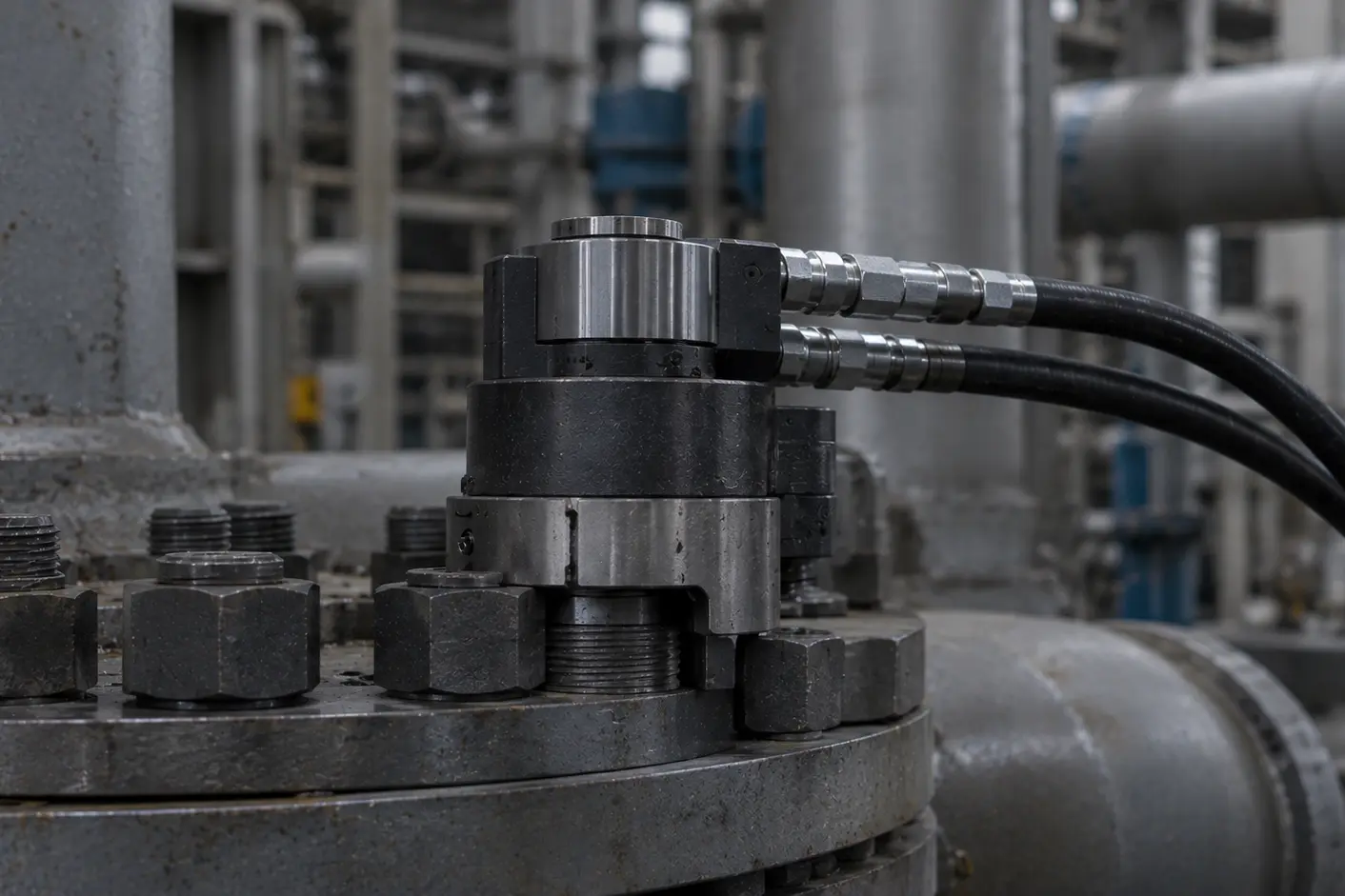
Main Types of Bolt Tensioners
Industrial tensioners vary primarily by how they apply pulling force, how they fit around fasteners, and how they are powered.
1. Standard Top-Side Hydraulic Bolt Tensioners
Standard top-side tensioners are the most common choice for industrial flanges, pressure vessels, and heavy equipment. They sit directly over the protruding stud threads and pull the bolt vertically upward along its axis.
How They Work: High-pressure fluid from a hydraulic pump enters the tensioner load cell, extending the piston and stretching the bolt cleanly without rotational friction. Once stretched, the technician turns the nut down flush against the joint face and releases pressure.
Best For: Standard flange bolting in oil and gas, power plants, chemical processing, and heavy manufacturing where sufficient stud protrusion is available.
2. Low-Clearance and Compact Tensioners
Some equipment layouts leave very little vertical or radial room above or around the bolt head. Compact or low-profile tensioners solve this problem with streamlined housings and shorter puller assemblies.
How They Work: They use compact internal piston geometries and specialized puller sleeves to stretch fasteners in tight quarters without requiring massive overhead clearance.
Best For: Heat exchangers, valve bonnets, close-bolt-circle flanges, and confined machinery bays.
3. Spring-Return vs. Hydraulic-Return Tensioners
Tensioners also differ in how their pistons retract back to the starting position after a pulling cycle is complete.
Spring-Return Tensioners: Internal heavy-duty springs automatically retract the piston once hydraulic pressure is released. They are simple, fast for single-tool or small-group work, and require fewer hose connections.
Hydraulic-Return Tensioners: Fluid pressure is used to actively push the piston back down. This design is popular on larger, heavy-duty tensioners where strong, controlled retraction is helpful during high-volume industrial shutdowns.
4. Multi-Stage and High-Load Tensioners
When working with large-diameter studs or demanding preload targets, single-stage pistons can become bulky. Multi-stage tensioners stack hydraulic stages to deliver high pulling force within a manageable footprint.
How They Work: Multiple concentric or stacked hydraulic chambers share the load under high pressure, generating strong axial tension while keeping outer dimensions practical.
Best For: Wind turbine towers, large structural anchor bolts, heavy presses, and high-pressure industrial vessels.
5. Mechanical and Pneumatic Tensioners
In addition to standard fluid-powered units, specialized mechanical or air-driven tensioning tools exist for lighter loads, tight spaces, or specific field routines.
How They Work: Mechanical tensioners apply stretch using threaded pulling mechanisms or ratchet leverage rather than hydraulic oil, while air-driven tensioners rely on pneumatic power units where compressed air is readily available.
Best For: Lighter structural assemblies, specialized field service tasks, or locations where compact, portable tensioning is preferred.
How to Choose the Right Tensioner
Selecting the best tensioner for a job depends on several practical factors on the work site:
Stud Protrusion and Thread Pitch: Make sure the bolt or stud extends far enough past the nut for the puller sleeve to engage safely.
Target Load and Bolt Diameter: Match the tensioner's maximum load rating to the fastener grade and required preload.
Workspace Clearance: Check both vertical headroom above the stud and side clearance around neighboring bolts.
Pump and Manifold Setup: Pairing tensioners with a reliable hydraulic pump and synchronized hoses allows operators to tension multiple bolts evenly, saving time and improving joint uniformity.
Achieving Excellence with Professional Equipment
Success in heavy industrial assembly and maintenance relies on selecting robust tools and maintaining them with high-quality equipment engineered specifically for the demands of your trade.
Engineering for Consistent Results
When operating high-pressure systems or assembling critical machinery, you need equipment designed for extreme durability and reliable performance. Precision-machined components, dependable seal designs, and solid structural housings help technicians achieve accurate results under heavy loads. SAIVS focuses on providing reliable bolting and fluid power solutions—from manual torque wrenches to heavy-duty Hydraulic Torque Wrenches, Hydraulic Cylinders, and hydraulic pumps—that stand up to demanding industrial environments.
Expert Support for Your Tooling Needs
Selecting the ideal tensioner style, matching pressure ratings, or planning joint assembly procedures requires a clear understanding of mechanical dynamics. If you need assistance with equipment selection, sizing, or troubleshooting, consult with experts who understand industrial bolting. Professional guidance helps protect your operational safety and efficiency.
Trusted Solutions for Industrial Excellence
For professionals demanding the best in measurement, fluid power, and assembly tools, Saivs offers a comprehensive range of industrial equipment. Their commitment to engineering quality and reliability helps keep your projects on track and within strict specifications. By choosing Saivs, you invest in durability, precision, and long-term industrial success.
Why Choose SAIVS™ as Your Supplier?
With 20 years of industry experience, SAIVS is a leading Chinese manufacturer of high-quality tools, offering competitive pricing and excellent customer service.We pride ourselves on exceptional quality control, extensive experience, and comprehensive after-sales service.