Should You Lubricate a Torque Wrench?
In automotive maintenance, manufacturing assembly, and heavy industrial construction, keeping precision tools in top working condition is vital for structural safety. Many technicians, mechanics, and equipment operators often ask: should you lubricate a Torque Wrench? The short answer is generally no—unless you are performing a complete, professional overhaul and recalibration.
Unlike standard ratchets or pry bars, a torque wrench is a delicate measuring instrument. Applying oil or grease directly to the internal calibration mechanisms can drastically change internal friction levels, throwing off the tool's accuracy and causing dangerous over-tightening or under-tightening of critical bolts. Understanding how lubrication affects Torque Tools helps maintenance teams care for their equipment properly without compromising joint integrity.
Why You Should Not Lubricate a Torque Wrench Internally
To understand why adding oil is risky, it helps to look at what happens inside a mechanical click-type or dial torque wrench during operation.
1. Altering Internal Friction and Calibration
Inside a standard click-type Manual Torque Wrench, a calibrated spring pushes against a pivot block or cam mechanism. Manufacturers calibrate these tools at the factory using exact amounts of specialized, high-viscosity grease on specific internal contact surfaces. If you spray penetrating oil, general-purpose lubricant, or heavy grease into the handle or head, the fresh lubricant reduces friction on the pivot surfaces. Less friction causes the wrench to "click" prematurely—meaning you will consistently under-tighten fasteners without realizing it.
2. Attracting Dust, Dirt, and Metal Shavings
Excess oil or grease inside a wrench housing acts like a magnet for airborne shop dust, metal shavings, and grit. Over time, this debris mixes with the lubricant to form an abrasive paste that wears down precision internal bearings, springs, and ratchet teeth, permanently damaging the instrument.
3. Voiding Factory Calibration Certificates
For facilities operating under strict ISO quality standards or industrial safety compliance, opening a torque wrench or adding unapproved lubricants immediately invalidates its calibration certificate. Any tool tampered with in the field must be removed from service and tested on a certified digital torque analyzer before being used again.
Safe Cleaning and External Care Practices
While internal lubrication should be avoided during routine use, keeping the outside of your wrench clean and corrosion-free is essential for longevity.
Wipe Down the Exterior After Use
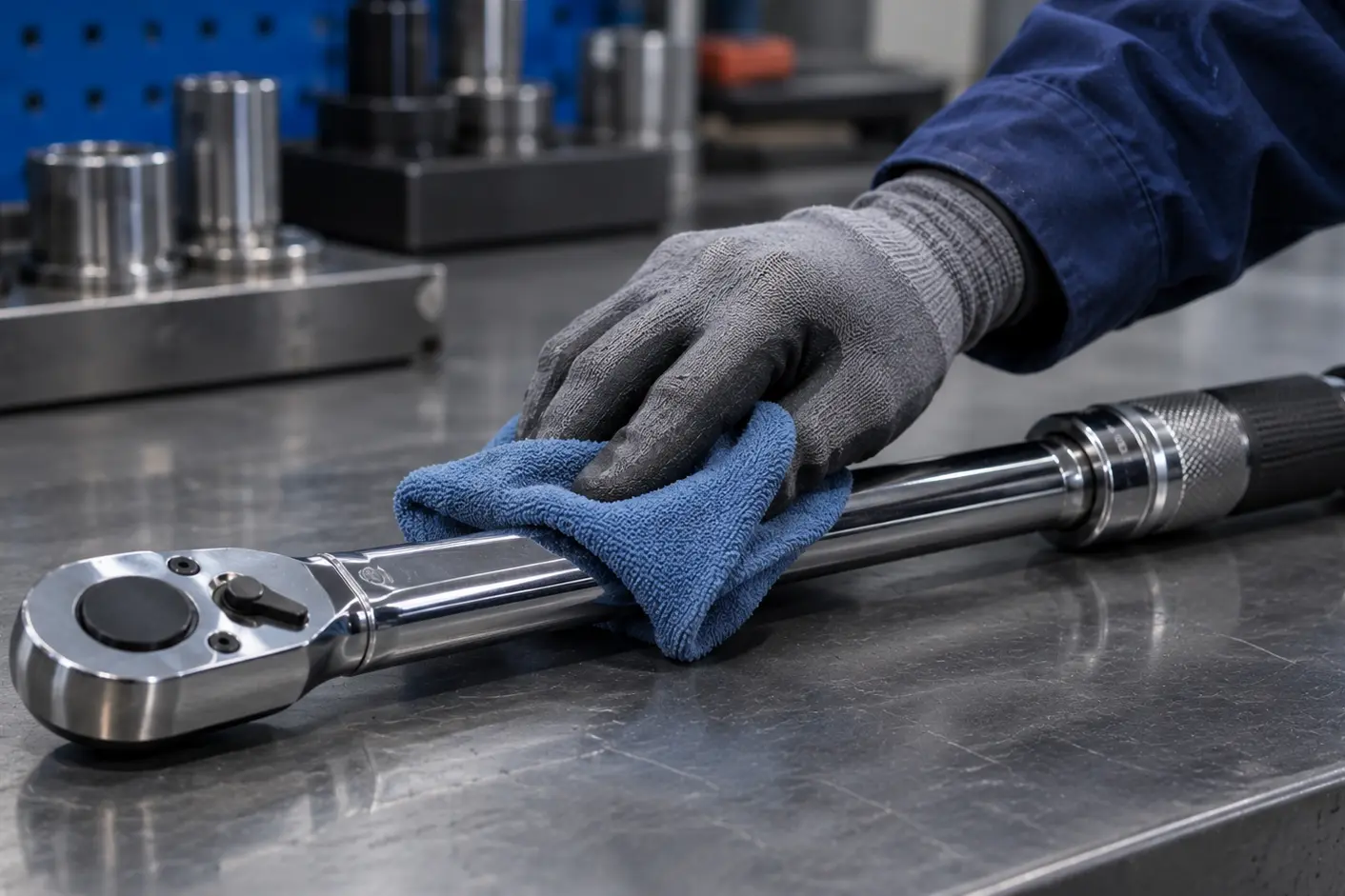
After completing your bolting tasks, use a clean, dry microfiber cloth to wipe away oil, grease, moisture, and shop grime from the chrome body, handle grip, and ratchet head. Avoid dunking the wrench in parts-washing solvents, degreasers, or ultrasonic cleaners, as harsh chemicals will wash away the factory's internal grease and ruin the seals.
Lightly Protect External Surfaces from Rust
If you work in humid, marine, or outdoor environments, you can apply a tiny drop of light machine oil onto a clean rag and wipe a microscopic film over the external metal surfaces to prevent surface rust—making sure no liquid drips into the ratchet head or adjustment collar.
Dial Down the Spring Before Storage
Always reset a micrometer click-type torque wrench back to its lowest scale setting (never below zero) before placing it in its protective storage case. Relieving tension on the internal spring prevents metal fatigue and keeps your calibration stable between service intervals.
When Is Lubrication Actually Needed?
The only time a torque wrench should be lubricated is during scheduled maintenance performed by a certified calibration laboratory or trained tool technician.
Professional Teardown and Relubrication
During an annual overhaul, a certified technician disassembles the ratchet head and internal torque mechanism, cleans out old degraded grease, inspects internal pawls and springs for wear, applies exact manufacturer-specified lubricants, and immediately calibrates the tool across its entire torque range to verify accuracy.
Achieving Excellence with Professional Equipment
Success in industrial assembly and maintenance relies on selecting robust tools and maintaining them properly for the demands of your work environment.
Engineering for Consistent Results
When assembling critical machinery, automotive drivetrains, or structural flanges, you need measurement tools designed for extreme durability and reliable accuracy. Precision-machined internal components, sealed ratchet heads, and clear scale markings ensure consistent performance under continuous heavy use. SAIVS focuses on providing high-grade bolting solutions—from manual torque wrenches to heavy-duty Hydraulic Torque Wrenches and hydraulic pumps—that stand up to demanding industrial environments, giving you dependable results every single time.
Expert Support for Your Tooling Needs
Selecting the ideal torque instrument, establishing proper storage routines, or managing annual calibration schedules requires a clear understanding of mechanical dynamics. If you need assistance with equipment selection, maintenance best practices, or industrial bolting procedures, consult with experts who understand precision tooling. Professional guidance ensures that your hardware investments protect your operational safety and efficiency.
Trusted Solutions for Industrial Excellence
For professionals demanding the best in measurement and assembly, Saivs offers a comprehensive range of industrial equipment. Their commitment to engineering quality and reliability helps keep your projects on track and within strict specifications. By choosing Saivs, you invest in precision, durability, and the long-term success of your industrial operations.
Why Choose SAIVS™ as Your Supplier?
With 20 years of industry experience, SAIVS is a leading Chinese manufacturer of high-quality tools, offering competitive pricing and excellent customer service.We pride ourselves on exceptional quality control, extensive experience, and comprehensive after-sales service.