How Often Should Industrial Torque Tools Be Calibrated for Accurate Bolting Performance
How Often Should Torque Tools Be Calibrated
Torque tools are essential equipment in industrial bolting operations.
Hydraulic torque wrenches, pneumatic torque tools, electric torque systems, and Manual Torque Wrenches must maintain accurate torque output to ensure safe and reliable fastening performance.
Without regular calibration, torque tools may gradually lose accuracy due to wear, vibration, pressure fluctuations, and repeated heavy-duty operation.
Incorrect torque values can cause loose bolts, damaged fasteners, equipment failure, and costly downtime.
For industrial companies involved in heavy machinery maintenance, pipeline installation, wind energy projects, and structural assembly, proper torque tool calibration schedules are extremely important.
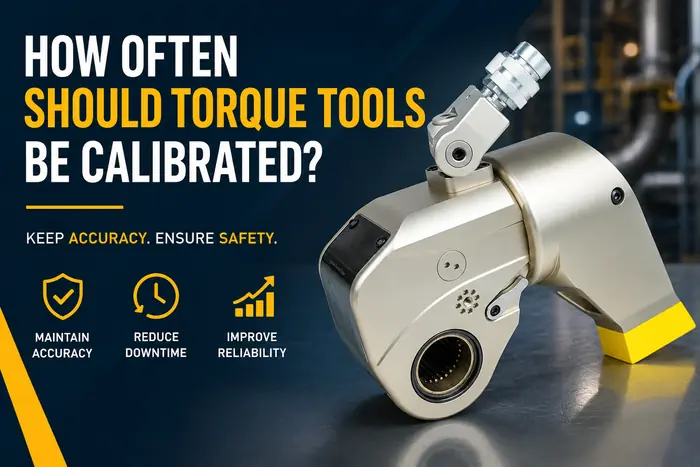
Why Torque Tool Calibration Is Necessary
Maintaining torque accuracy
Torque tools are designed to apply precise clamping force to bolted connections.
Over time, internal components experience mechanical wear that affects torque output consistency.
Calibration ensures the tool continues to operate within the required accuracy range.
This helps maintain stable fastening performance for critical industrial applications.
Preventing Industrial Equipment Failure
Improper torque values can create serious operational risks.
Under-tightened bolts may loosen during operation.
Over-tightened bolts can deform, crack, or fail under stress.
In industries such as oil and gas, power generation, and heavy construction, inaccurate bolting can result in production shutdowns and safety incidents.
Recommended Torque Tool Calibration Frequency
Based on Usage Frequency
Industrial torque tools used daily in heavy-duty environments require more frequent calibration.
Most manufacturers recommend calibration every 3 to 12 months depending on tool usage intensity.
Tools operating continuously under high loads may require shorter calibration intervals.
Equipment used occasionally in lighter applications may allow longer inspection cycles.
Based on Torque Cycle Count
Some industrial facilities schedule calibration according to the number of torque cycles completed.
After thousands of repeated fastening operations, internal wear can affect accuracy.
Monitoring torque cycle counts helps maintain consistent bolting performance.
After Heavy Impact or Overload
If a torque tool experiences accidental dropping, overload conditions, or severe impact, immediate recalibration is recommended.
Physical shock can damage internal calibration settings and affect output accuracy.
Regular inspection after abnormal operating conditions helps prevent unexpected failures.
Industries That Require Frequent Calibration
Wind Power Maintenance
Wind turbines require highly accurate bolting systems to withstand vibration and environmental stress.
Torque tools used for tower assembly and blade installation often require regular calibration inspections.
Oil and Gas Operations
Pipeline flanges, pressure vessels, and refinery systems depend on precise bolt preload force.
Frequent calibration helps maintain safe sealing performance and reduces leak risks.
Heavy Equipment Manufacturing
Mining machinery, construction equipment, and industrial production systems require reliable fastening quality.
Calibrated torque tools improve assembly consistency and equipment durability.
Signs That Torque Tools Need Calibration
Inconsistent Torque Output
If bolts feel unevenly tightened or operators notice inconsistent fastening results, the tool may require recalibration.
Irregular torque performance can reduce assembly quality and increase maintenance risks.
Visible Wear or Damage
Hydraulic leaks, worn drive components, damaged reaction arms, and abnormal noises may indicate internal performance problems.
Calibration inspection should be performed immediately when these signs appear.
Failed Quality Inspections
If bolted connections repeatedly fail inspection or loosen during operation, inaccurate torque application may be the cause.
Calibration testing helps identify and correct torque deviations quickly.
Benefits of Regular Torque Tool Calibration
Improved Equipment Reliability
Accurate torque tools maintain stable clamping force and reduce the risk of mechanical failure.
This improves equipment operating reliability and long-term performance.
Reduced Maintenance Costs
Proper calibration helps prevent bolt damage, flange leaks, and equipment breakdowns.
This lowers repair costs and minimizes unplanned downtime.
Longer Tool Lifespan
Routine calibration and maintenance inspections help identify wear problems before severe damage occurs.
This extends the service life of industrial torque tools and bolting equipment.
Selecting a Reliable Torque Tool Calibration Partner
Professional calibration service providers use certified testing equipment to ensure precise torque verification.
Reliable suppliers also provide technical support, maintenance services, spare parts, and Industrial bolting solutions.
Choosing high-quality torque tools with stable calibration performance helps improve operational safety and industrial productivity.
For companies operating in demanding industrial environments, regular Torque Wrench Calibration is an important part of maintaining safe and efficient bolting operations.
Why Choose SAIVS™ as Your Supplier?
With 20 years of industry experience, SAIVS is a leading Chinese manufacturer of high-quality tools, offering competitive pricing and excellent customer service.We pride ourselves on exceptional quality control, extensive experience, and comprehensive after-sales service.