Hydraulic Torque Wrench Selection Guide for Industrial Bolting Applications
Hydraulic Torque Wrench selection, industrial Torque Tools supplier, bolting tools
In precision bolting operations, the selection of a hydraulic torque wrench is not only a tooling decision but also a critical factor in ensuring joint integrity and operational safety.
Incorrect torque application can lead to bolt failure, flange leakage, and costly downtime.
Therefore, understanding the technical parameters behind hydraulic torque tools is essential for engineers and procurement professionals.
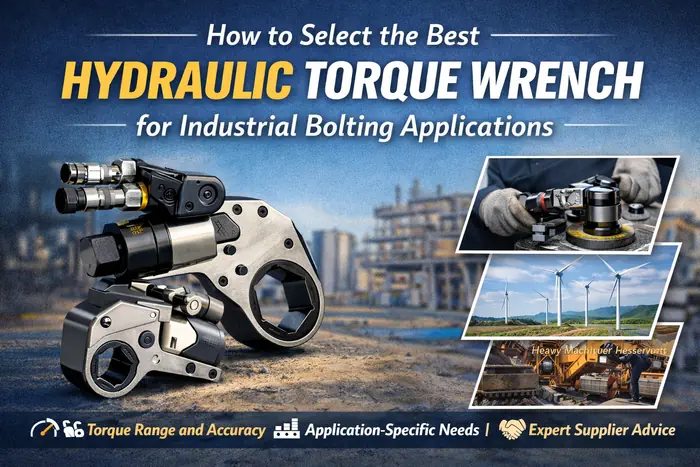
Working Principle of Hydraulic torque wrenches
A hydraulic torque wrench converts hydraulic pressure into rotational force through an internal piston mechanism.
The generated torque is controlled by adjusting the pressure from the hydraulic pump.
This allows for repeatable and highly accurate bolt tightening.
Such systems are widely implemented in industries where torque precision is mandatory.
Drive Mechanism and Output Control
The torque output is directly proportional to the hydraulic pressure applied.
This relationship ensures predictable performance under controlled conditions.
Advanced models integrate calibration charts or digital readouts for precise torque setting.
Classification of Hydraulic Torque Wrench Designs
Square Drive Type
square drive torque wrenches are versatile tools designed for multi-purpose applications.
They support interchangeable sockets, making them suitable for maintenance, repair, and assembly tasks.
This type is ideal where space constraints are minimal.
Low Profile (Cassette) Type
Low Profile Torque Wrenches are engineered for applications with limited radial clearance.
They are commonly used in flange bolting systems in petrochemical and pipeline industries.
The cassette design improves access while maintaining high torque accuracy.
Critical Technical Parameters for Selection
Torque Output Range
The required torque range must be clearly defined before tool selection.
Choosing a wrench that operates within 20% to 80% of its maximum capacity ensures optimal performance.
Operating near extreme limits can reduce accuracy and accelerate wear.
Accuracy and Repeatability
Industrial bolting applications typically require accuracy within ±3%.
High repeatability is essential to maintain uniform bolt preload across multiple fasteners.
Certified calibration and traceability should be verified before purchase.
Hydraulic System Compatibility
The torque wrench must be compatible with the hydraulic pump in terms of pressure range and flow rate.
Standard systems operate up to 700 bar.
Using incompatible equipment may result in unstable torque output or system inefficiency.
Material Strength and Durability
High-strength alloy materials enhance tool durability under continuous heavy loads.
Surface treatments such as anti-corrosion coatings are important for offshore and chemical environments.
Robust construction ensures long service life and reduced maintenance frequency.
Application-Specific Considerations
Flange Bolting Operations
Low profile torque wrenches are preferred due to limited bolt spacing.
Uniform torque application is critical to prevent leakage in high-pressure pipelines.
Wind Energy Equipment
High torque capacity tools are required for turbine installation and maintenance.
Consistency and reliability are essential due to safety and operational demands.
Heavy Machinery Assembly
Square drive torque wrenches provide flexibility for various bolt sizes.
They are commonly used in construction equipment and mining machinery.
Supplier Evaluation Criteria
Choosing a professional industrial torque tools supplier ensures product reliability and technical support.
Key factors include manufacturing capability, quality control standards, and customization options.
Suppliers should provide complete documentation, including calibration certificates and operating guidelines.
After-sales service, spare parts availability, and fast response times are also essential for long-term cooperation.
Technical Support and Customization
Engineering support helps match the correct tool to specific applications.
Customized solutions improve efficiency in complex or non-standard working conditions.
This reduces operational risks and enhances productivity.
Conclusion
The selection of a hydraulic torque wrench should be based on detailed technical evaluation rather than price alone.
Torque range, accuracy, tool design, and system compatibility must be carefully analyzed.
A well-selected tool ensures safe, efficient, and repeatable bolting performance.
For industrial buyers seeking reliable bolting solutions, working with an experienced supplier is the most effective approach.
Submit your inquiry now to receive tailored recommendations and competitive quotations for your project requirements.
Why Choose SAIVS™ as Your Supplier?
With 20 years of industry experience, SAIVS is a leading Chinese manufacturer of high-quality tools, offering competitive pricing and excellent customer service.We pride ourselves on exceptional quality control, extensive experience, and comprehensive after-sales service.