What Is the Difference Between a Hydraulic Torque Wrench and a Hydraulic Bolt Tensioner?
In heavy construction, wind energy, oil refineries, and large-scale manufacturing, securing critical flanged joints and structural bolts requires specialized equipment. Many engineers and technicians often ask: what is the difference between a Hydraulic Torque Wrench and a hydraulic bolt tensioner? While both tools utilize high-pressure fluid power to secure heavy fasteners, they operate on completely different mechanical principles to achieve joint tightness.
Understanding the distinction between torque-based rotation and direct tension-based stretching allows maintenance teams to choose the safest, most efficient tool for their specific bolting applications.
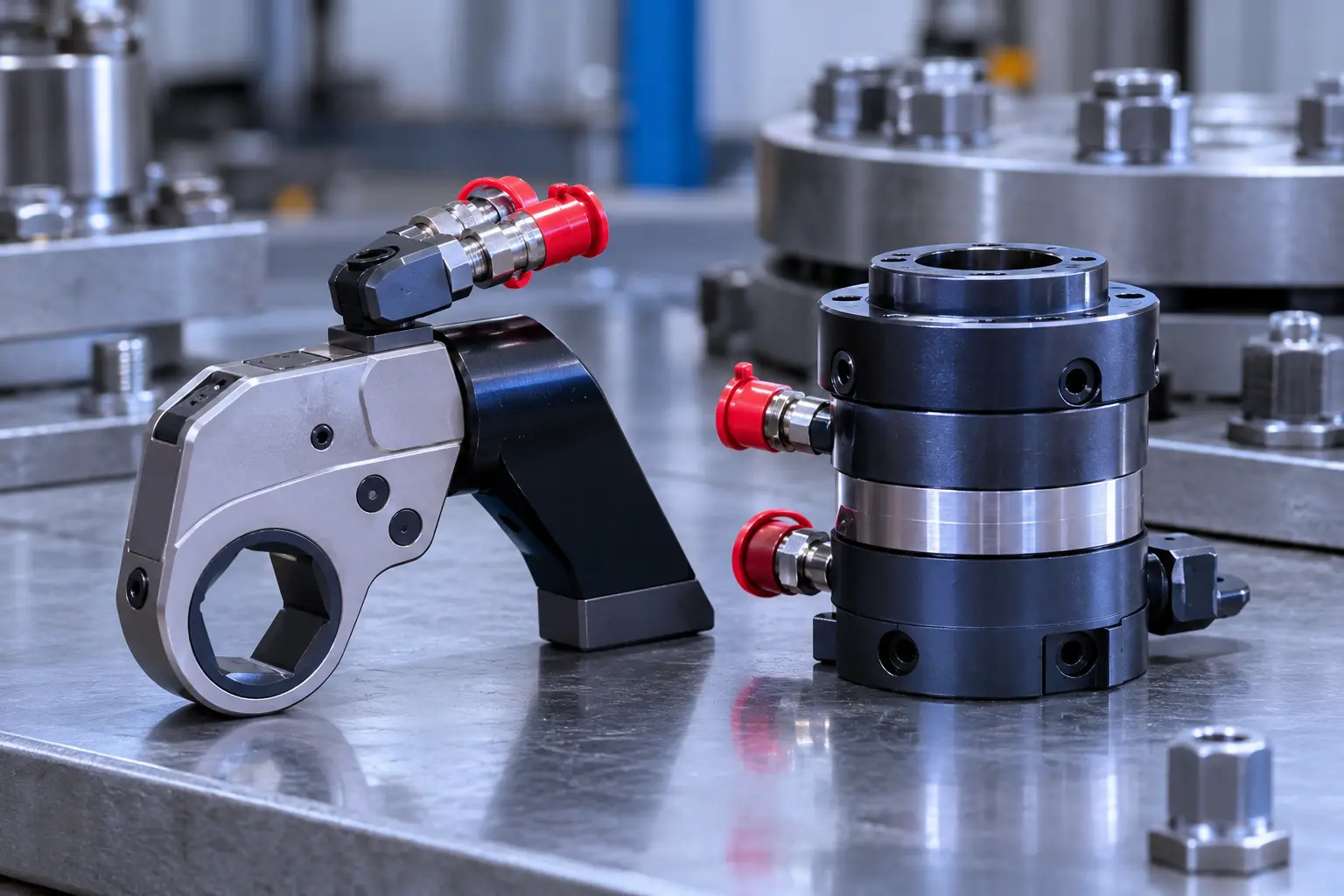
Comparing Operating Principles: Friction vs. Direct Stretch
The primary distinction between these two high-pressure tools lies in how force is delivered to the fastener.
Hydraulic Torque Wrench: Rotational Force and Friction Management
A hydraulic torque wrench uses fluid pressure delivered from an electric or pneumatic hydraulic pump to drive a mechanical ratchet system. This ratchet applies high rotational force (torque) directly to turn the nut or bolt head.
The Mechanism: The tool rotates the nut around the bolt's threads.
The Friction Factor: As the nut turns, significant friction is generated between the mating threads and against the face of the flange. Approximately 80% to 90% of the energy applied by a torque wrench is expended overcoming friction, leaving only a fraction of the force to stretch the bolt and create clamping load.
Hydraulic Bolt Tensioner: Direct Axial Stretch
A hydraulic bolt tensioner (sometimes referred to as a tensioning wrench) does not rotate the bolt to achieve tightness. Instead, it threads onto the extended tip of a stud bolt and pulls it vertically along its central axis.
The Mechanism: The tensioner acts like a hollow hydraulic actuator, lifting and stretching the bolt shaft upward like a heavy-duty spring.
Friction-Free Operation: Because the bolt is stretched directly, there is zero thread friction during the pulling phase. Once the proper elongation is reached, the technician simply spins the nut down flush against the flange surface by hand, and the hydraulic pressure is released to lock the joint in place.
Key Differences in Application and Workflow
Choosing between a hydraulic torque wrench and a tensioner depends on workspace clearance, joint sensitivity, and application speed.
| Operational Feature | Hydraulic Torque Wrench | Hydraulic Bolt Tensioner |
| Force Application | Rotational turning (Torque) | Direct upward pull (Axial Tension) |
| Friction Resistance | High (requires accurate thread lubrication) | Zero (bypasses thread friction entirely) |
| Stud Length Requirement | Standard bolt/stud protrusion | Requires extra exposed thread length |
| Simultaneous Operation | Typically 1 to 4 tools per manifold | Multiple tools (100% flange coverage possible) |
| Best Used For | General industrial maintenance, varied bolt sizes | High-pressure flanges, nuclear, subsea, wind towers |
1. Fastener Geometry and Clearance Requirements
Hydraulic torque wrenches are compact and versatile, fitting over standard nuts in tight radial clearances. Bolt Tensioners, however, require additional exposed thread length sticking out beyond the nut so the puller sleeve can grip the stud securely.
2. Speed and Flange Coverage
While a hydraulic torque wrench works through one bolt at a time (or in pairs), hydraulic tensioners can be linked together in large series. On critical pipe flanges or pressure vessel lids, technicians can connect tensioners to every single bolt, pressurizing them simultaneously to clamp the entire joint perfectly even in a single stroke.
Achieving Excellence with Professional Equipment
Success in industrial assembly relies on selecting robust tools and maintaining them with high-quality supplies engineered specifically for the demands of your work environment.
Engineering for Consistent Results
When operating high-pressure systems or assembling critical machinery, you need equipment designed to eliminate guesswork. Robust tools, precision-calibrated gauges, and reliable fluid power systems ensure accurate force application. SAIVS focuses on providing reliable bolting solutions—from Manual Torque Wrenches to advanced heavy-duty hydraulic tools—that help technicians achieve exact specifications every single time.
Expert Support for Your Tooling Needs
Selecting the ideal tightening tool, understanding friction factors, or establishing proper calibration routines requires a clear understanding of mechanical dynamics. If you need assistance with equipment selection, custom tooling, or assembly procedures, consult with experts who understand industrial bolting. Professional guidance ensures that your hardware investments protect your operational safety.
Trusted Solutions for Industrial Excellence
For professionals demanding the best in measurement and assembly, Saivs offers a comprehensive range of industrial equipment. Their commitment to engineering quality and reliability helps keep projects on track and within strict specifications. By choosing Saivs, you invest in precision, durability, and the long-term success of your operations.
Why Choose SAIVS™ as Your Supplier?
With 20 years of industry experience, SAIVS is a leading Chinese manufacturer of high-quality tools, offering competitive pricing and excellent customer service.We pride ourselves on exceptional quality control, extensive experience, and comprehensive after-sales service.