What Should Buyers Know About Different Types of Hydraulic Cylinders Before Shipment?
Hydraulic Cylinders are important tools in many industrial applications. Different models are designed for different lifting tasks, working spaces, and load requirements. A hollow plunger hydraulic cylinder, such as the RCH1003, is suitable for applications that require both pushing and pulling forces. A General Purpose Hydraulic Cylinder, such as the RC158, is commonly used for lifting, positioning, and maintenance work.
Although both cylinders use hydraulic pressure to produce force, their structures and working features are different. The RCH1003 has a hollow plunger and a lifting capacity of 100 tons, while the RC158 has a solid plunger and a lifting capacity of 15 tons. Understanding these differences helps buyers choose the right equipment and check whether the products meet their project requirements.
What Are the Main Types of Hydraulic Cylinders?
Hydraulic cylinders convert hydraulic energy into mechanical force. They use pressurized oil to move a plunger or piston. Different cylinder designs provide different movement directions, load capacities, and working ranges.
What Is a Hollow Plunger Cylinder?
A hollow plunger cylinder has an open center inside its plunger. This design allows a rod, cable, or other suitable component to pass through the center during operation. It can be used for both pushing and pulling tasks when the correct accessories are selected.
This structure is useful in applications such as tensioning, pulling, pressing, and mechanical installation. Compared with some traditional solid plunger designs, the hollow structure provides more working possibilities for projects that need a central opening.
What Is a General Purpose Hydraulic Cylinder?
A general purpose hydraulic cylinder is designed for common lifting and pushing operations. It usually has a solid plunger that moves upward when hydraulic oil enters the cylinder. When the pressure is released, a spring helps return the plunger to its original position.
This type of cylinder is widely used in equipment maintenance, industrial lifting, machine installation, and other applications that need controlled lifting force. Different models offer different capacities and stroke lengths to meet different working requirements.
How Does a Single-Acting Cylinder Work?
A single-acting hydraulic cylinder uses hydraulic pressure to move in one direction. When hydraulic oil enters the cylinder, the plunger moves outward and produces lifting or pushing force. When the oil pressure is released, the return spring moves the plunger back.
This design has a relatively simple structure and is easy to connect to a suitable hydraulic pump. It is commonly used in applications where the main working movement only needs to happen in one direction.
What Makes the RCH1003 Hollow Plunger Hydraulic Cylinder Different?
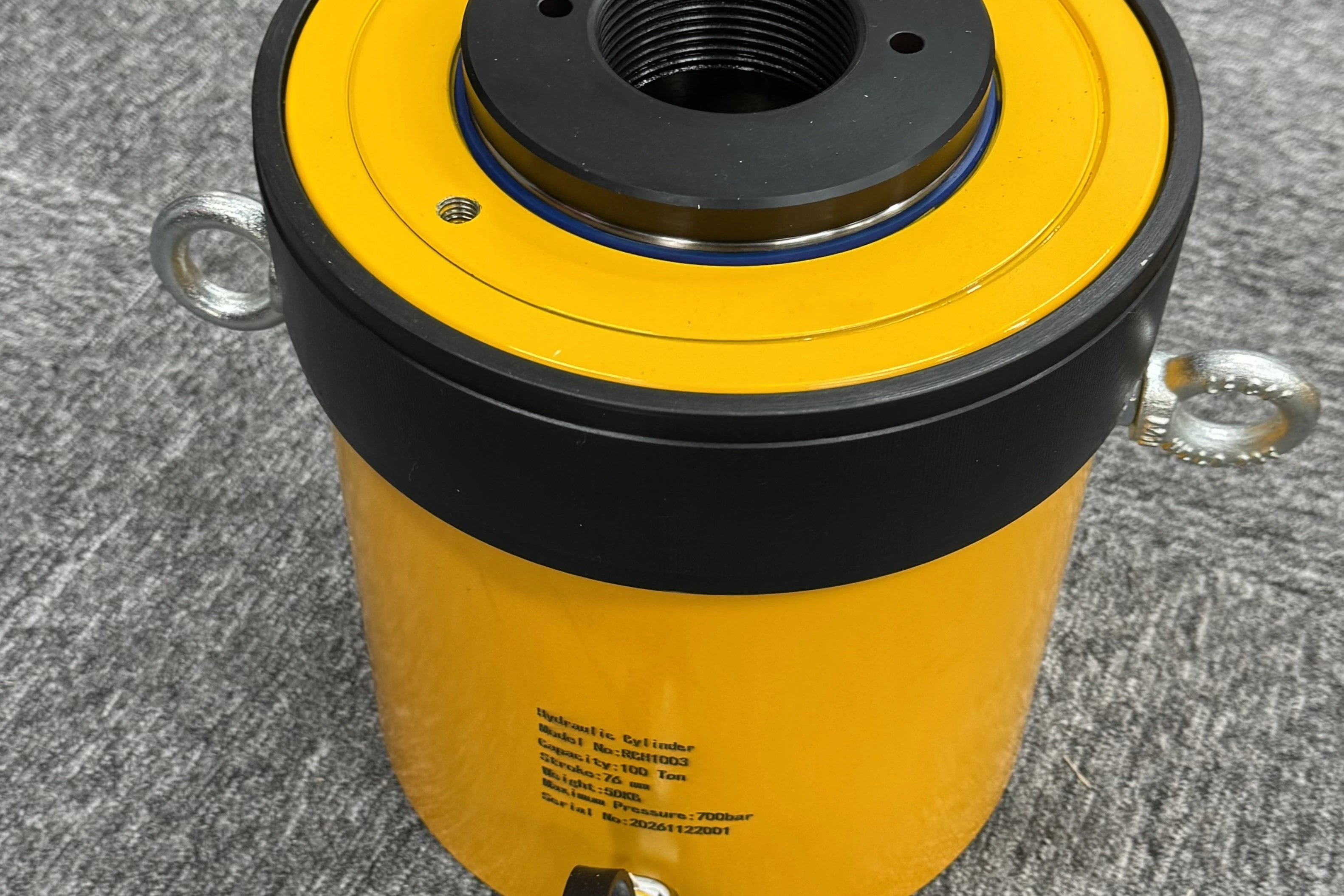
The RCH1003 is a high-capacity hollow plunger hydraulic cylinder. It is designed for heavy-duty industrial work where strong lifting force and a hollow center are important. Its main specifications help buyers understand its working range and equipment requirements.
What Are the Main Specifications of the RCH1003?
The RCH1003 has a rated capacity of 100 tons, equal to approximately 947 kN. It provides a 76 mm stroke, which is about 2.99 inches. Its maximum working pressure is 700 bar or 10,000 psi.
The cylinder weighs approximately 63.5 kg, and its oil capacity is 1,028 cm³. It uses a single-acting spring return system and a hollow plunger design. These specifications make it suitable for heavy industrial applications that require high force within a limited movement distance.
How Does the Hollow Plunger Improve Working Flexibility?
The hollow center allows suitable rods and other components to pass through the plunger. This feature makes the cylinder useful for applications that need pulling force as well as pushing force.
For example, during equipment installation, a hollow cylinder can work with a suitable pulling rod to move or position heavy components. In tensioning work, the hollow structure can provide space for the central connection. The actual working method depends on the accessories, equipment design, and project requirements.
Why Is the Guide Ring Important?
During hydraulic lifting, the load may not always be perfectly centered. This can create side forces that affect the plunger and the internal cylinder parts.
The RCH1003 uses a special guide ring to help absorb eccentric loading. It helps reduce direct friction between important components and lowers the risk of excessive wear. This design can help protect the cylinder during operation and support a longer service life when the cylinder is used correctly.
Why Is the RC158 General Purpose Hydraulic Cylinder Suitable for Common Lifting Work?
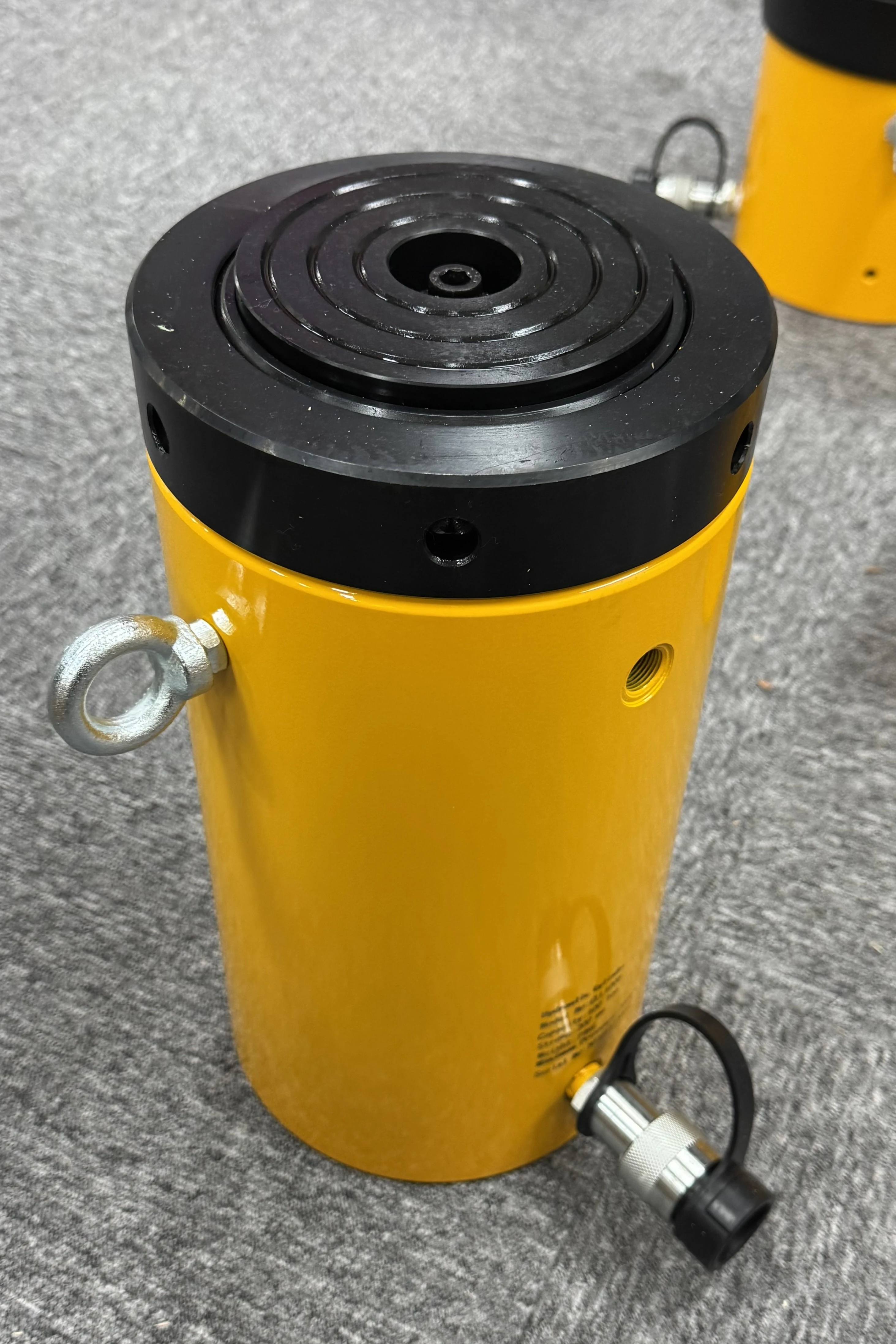
The RC158 is a 15-ton general purpose hydraulic cylinder with a solid plunger. It is designed for lifting and pushing applications that need reliable hydraulic force and a longer working stroke.
What Are the Main Specifications of the RC158?
The RC158 has a rated lifting capacity of 15 tons, equal to approximately 142 kN. Its stroke is 203 mm, or about 7.99 inches. The maximum working pressure is 700 bar or 10,000 psi.
The cylinder weighs approximately 8 kg and has an oil capacity of 431 cm³. It uses a single-acting spring return structure and a solid plunger. Compared with the RCH1003, it has a lower lifting capacity but a much longer stroke and a lighter body.
What Are the Advantages of a Solid Plunger?
A solid plunger provides a strong contact surface for ordinary lifting operations. It is suitable for applications where the cylinder needs to push a load upward without requiring a central opening.
The RC158 also comes with a removable hardened grooved saddle. This component provides a contact surface between the plunger and the load. Its grooved design helps improve contact stability during suitable lifting operations.
How Does the Spring Return System Work?
The RC158 uses a single-acting spring return system. Hydraulic oil pushes the plunger outward when the cylinder is connected to a suitable pump. After the hydraulic pressure is released, the internal spring helps return the plunger.
This design makes the cylinder relatively easy to operate and maintain. However, the load and working conditions must always be considered. Operators should not force the cylinder to return when it is still under pressure or when the load prevents safe movement.
How Should Buyers Choose Between Different Hydraulic Cylinder Models?
Choosing a hydraulic cylinder requires more than checking its lifting capacity. Buyers should consider the load, stroke, working space, plunger design, and hydraulic pump requirements. A suitable model can improve working efficiency and reduce unnecessary equipment costs.
How Much Lifting Capacity Is Required?
The lifting capacity is one of the most important factors when choosing a hydraulic cylinder. The selected cylinder must have enough rated capacity for the intended application.
The RCH1003 provides 100 tons of lifting capacity, while the RC158 provides 15 tons. They are designed for different load requirements. Buyers should calculate the actual load and consider the number of cylinders used in the lifting system.
For safety, the total load should be distributed correctly, and each cylinder must work within its rated capacity. A suitable safety margin should also be considered according to the project requirements.
How Important Is the Cylinder Stroke?
Stroke refers to the maximum distance that the plunger can move outward from its original position. It directly affects how far the cylinder can lift or push a load in one movement.
The RCH1003 has a 76 mm stroke, while the RC158 has a 203 mm stroke. The RC158 can provide a longer movement distance in one operation. However, a longer stroke does not mean that a cylinder has a higher lifting capacity.
Buyers should measure the required lifting distance before selecting a model. If the required movement is greater than the available stroke, additional equipment or multiple lifting steps may be needed.
Which Plunger Structure Is Better for the Application?
A hollow plunger is suitable for work that requires a central opening or pulling movement. A solid plunger is more suitable for ordinary lifting and pushing tasks.
The RCH1003 is a good example of a high-capacity hollow cylinder, while the RC158 is designed for general lifting operations with a solid plunger. Buyers should first understand the actual working process instead of selecting a cylinder only by its appearance or price.
What Should Be Checked Before Hydraulic Cylinders Are Shipped?
Pre-shipment inspection is an important part of industrial equipment delivery. Hydraulic cylinders need to meet the required specifications and should be properly prepared before transportation. A clear inspection process helps reduce delivery problems and gives buyers more confidence.
Are the Product Models and Specifications Correct?
The first step is to check the model number and product specifications against the order. The RCH1003 and RC158 have different capacities, strokes, weights, and plunger structures.
The product label and order information should match the actual goods. Buyers should also check the quantity and any special requirements agreed upon before production. Correct product identification helps avoid confusion during transportation and later installation.
Are the External Surfaces in Good Condition?
The cylinder surface should be checked for visible damage, scratches, rust, and paint problems. The plunger, cylinder body, connection points, and mounting areas should also be inspected.
A special painted surface helps improve corrosion resistance, but proper handling is still necessary during storage and transportation. Any visible damage should be recorded and checked before the products leave the factory.
Are the Hydraulic Connections and Accessories Complete?
Hydraulic connections are important because they connect the cylinder to the hydraulic pump and oil system. The RCH1003 and RC158 include NPT3/8"-18 quick couplings and dust caps.
Before shipment, the connection parts should be checked for visible damage and correct installation. Dust caps should be properly fitted to help prevent dirt from entering the hydraulic system during storage and transportation.
How Can Hydraulic Cylinders Be Prepared for Safe Transportation?
Hydraulic cylinders are precision industrial products. Although they are made for heavy-duty work, improper transportation can still cause damage to their surfaces and internal components.
Why Is Proper Packaging Important?
Proper packaging helps protect hydraulic cylinders from impact, dust, moisture, and friction during transportation. The packaging method should match the product weight, size, and shipping distance.
Heavy models such as the RCH1003 need strong support to prevent unwanted movement. Lighter models such as the RC158 should also be fixed securely. Suitable protective materials can help reduce scratches and damage caused by contact with other goods.
How Should Cylinders Be Stored Before Installation?
Hydraulic cylinders should be stored in a clean and dry environment. Their oil ports and hydraulic connections should remain protected with dust caps or suitable covers.
The plunger surface should be protected from dirt, water, and direct impact. Long-term exposure to moisture may affect the external metal surface and reduce corrosion protection. Proper storage helps keep the equipment in good condition before installation.
What Information Should Buyers Receive After Shipment?
Buyers should receive clear shipping information, including product models, quantities, and relevant transportation documents. Product photos taken before packing can also help buyers confirm the goods.
For industrial equipment orders, clear communication is important. It allows buyers to prepare suitable hydraulic pumps, hoses, installation tools, and other accessories before the products arrive.
How Can Hydraulic Cylinders Maintain Stable Performance During Use?
Correct operation and regular maintenance help hydraulic cylinders work more reliably. Even high-quality equipment can experience problems if it is overloaded, connected incorrectly, or used without proper inspection.
Why Must the Hydraulic Pump Match the Cylinder?
Hydraulic cylinders need a suitable pump to provide the required oil pressure and oil volume. Both the RCH1003 and RC158 have a maximum working pressure of 700 bar or 10,000 psi.
The pump must be compatible with the cylinder's working pressure and oil requirements. Using unsuitable equipment may cause unstable operation or damage to the hydraulic system. The hydraulic hose and quick coupling should also meet the required pressure rating.
Why Should Operators Check for Oil Leakage?
Oil leakage can reduce system pressure and affect lifting performance. It may also indicate problems with seals, connections, or other Hydraulic Components.
Before operation, users should check the hydraulic hose, quick coupling, and cylinder body for visible oil leakage. If leakage is found, the equipment should be stopped and inspected by qualified personnel before further use.
How Can the Service Life of a Cylinder Be Extended?
Regular cleaning and inspection help reduce unnecessary wear. The plunger surface should be kept clean, and the cylinder should not be exposed to excessive side loading or loads beyond its rated capacity.
Operators should also use clean hydraulic oil and follow the recommended maintenance procedures. After use, the cylinder should be returned to a suitable storage position with its connections protected. These basic steps can help maintain stable performance and extend equipment service life.
Why Choose SAIVS™ as Your Supplier?
With 20 years of industry experience, SAIVS is a leading Chinese manufacturer of high-quality tools, offering competitive pricing and excellent customer service.We pride ourselves on exceptional quality control, extensive experience, and comprehensive after-sales service.